How Can You Make a Large Profit on a Single Meme Coin Trade?
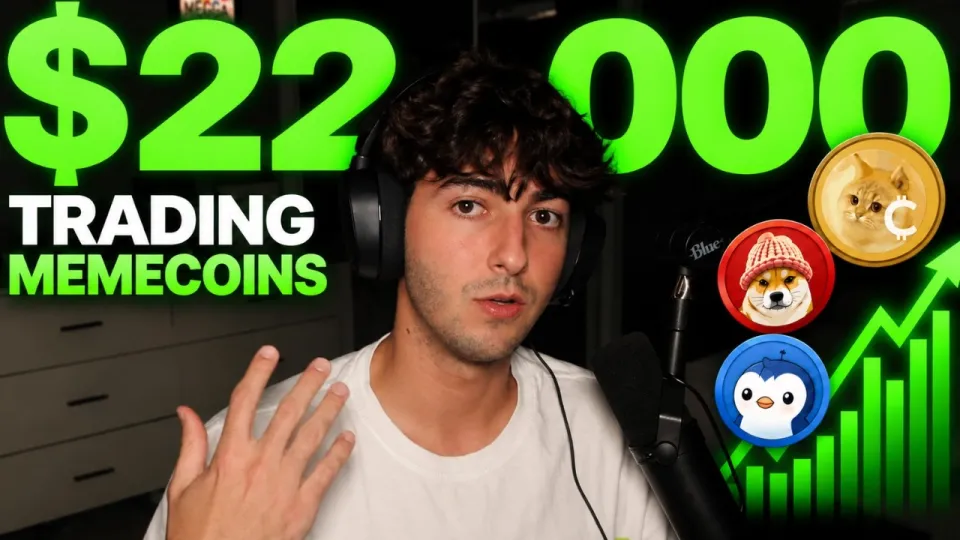
Video: How I Made $22,000 in a SINGLE Memecoin Trade (FULL GUIDE)
You can order the same kind of articles for your own video to boost it on YouTube and Google. Just message the Telegram bot @sat_sit_bot. It writes articles around your video, embeds the video and publishes them on popular niche websites (no ads). Try it free: 50 articles on us.
Key takeaways
- A single meme coin position can produce a five-figure dollar result when entry size, timing and exit discipline line up.
- Meme coin outcomes depend heavily on liquidity, holder distribution and how fast a narrative spreads, not on fundamentals.
- Position sizing and a pre-planned exit matter more than the size of the win in any single trade.
- Trading alongside a large group or a well-known account changes the odds and is hard to replicate as an outsider.
- Free beginner material is offered through the Whop page linked in the video description.
A large profit on a single meme coin trade comes from combining three things: a modest bankroll deployed early into a token with real momentum, a strict exit plan set before entry, and enough liquidity to sell into strength. In the breakdown published by Megga, the result shown is a $22,000 gain from one position, and the free beginner material behind that approach is available through the Whop beginner trading guide. The mechanics are repeatable in principle, but the outcome is not: meme coin trading is a high-variance activity where most attempts lose money.
What does a meme coin trade actually involve?
A meme coin trade is a speculative position in a token whose price is driven by attention rather than cash flow, revenue or a product. Because there is no valuation floor, price is set entirely by the balance of buyers and sellers at any moment, which is why moves can be enormous in both directions within hours.
Three variables decide the result of any single position:
- Entry size. The dollar amount committed determines both the upside and the damage if the token collapses.
- Liquidity depth. A token with a thin pool can show a large paper gain that cannot be sold without crashing the price.
- Exit discipline. A target and a stop decided before buying removes the emotional decisions that usually turn a winner into a loss.
A $22,000 result implies a position large enough that a multiple on it produced five figures, which also means the downside on the same position was measured in thousands. That asymmetry is the part beginners most often underestimate.
How do you plan a single meme coin position step by step?
Planning a meme coin position means defining the amount you can lose entirely, the level at which you exit for a loss, and the level at which you take profit, all before the first buy. The sequence below is the practical version of that discipline.
- Fix the risk budget first. Decide the maximum dollar loss you accept on the trade and treat it as already spent. On a token with a realistic chance of going to near zero, that number should be small relative to your total capital.
- Check the contract and the pool. Confirm the token address from an official source, look at the liquidity pool size and whether liquidity is locked, and check who holds the largest wallets. A handful of wallets controlling most of the supply is a warning, not an opportunity.
- Size the entry against liquidity. If your order is a significant fraction of the pool, your own buy moves the price and your exit will move it back down. Keep the position small enough that selling does not define the chart.
- Set the exit before entry. Write down the price or market-cap level where you sell part of the position and the level where you cut the rest. Scaling out in tranches protects part of the gain if momentum reverses.
- Execute without renegotiating. The most common failure is moving the stop lower because the chart looks like it will recover. It rarely does.
Why do results like a $22,000 gain happen, and why are they hard to repeat?
Results of this size usually come from a combination of early entry, a fast narrative and a favorable exit window, and they are difficult to reproduce because those conditions depend on information and timing most traders do not have. A well-known account trading with a network of other traders can create the attention that moves a small-cap token; an outsider buying the same token later is often buying the exit liquidity of that group.
This is the substance behind the most common skepticism around large meme coin profit videos. The honest framing is that the strategy demonstrates a method, not a guarantee. Anyone comparing their results to a five-figure screenshot should assume the sample is selective: losses and failed launches rarely make the highlight reel. Treat any single reported win as one draw from a distribution, not as an expected return.
What risks and typical doubts come up most often?
Meme coin risk is dominated by the possibility of losing the entire position, and the typical doubts traders raise reflect that: whether the strategy works without a large following, whether small accounts can replicate it, and how much of the result depends on coordination with others.
The main risks to understand before copying any meme coin playbook:
- Rug pulls and liquidity removal. The team or a large holder can drain the pool, leaving a token that cannot be sold.
- Slippage and fees. On thin pools, the difference between the quoted and executed price can erase a large share of the gain, and network fees add up across many attempts.
- Survivorship bias. Winners are visible; the many tokens that went to zero are not.
- Social dependence. Outcomes improve sharply when a trader has an audience or a group acting together, and that advantage does not transfer to someone trading alone.
- Small-account math. Turning a few hundred dollars into a four-figure sum requires far higher multiples and far more risk than the headline trade implies, and a string of small losses is the normal path.
A useful test is to assume the worst case on every trade: if losing the full position would change your financial situation, the position is too large.
Which tools and links are used in the breakdown?
Megga's breakdown points viewers to a beginner guide and a trading terminal, and the links below are the ones listed with the video:
A trading terminal matters for meme coin execution because it shows pool data, holder distribution and price impact before you confirm an order, which is exactly the information needed for the sizing and contract checks described above.
What should a beginner take away from a five-figure meme coin result?
The takeaway from a five-figure meme coin result is a process, not a target: define the loss first, verify the token and its liquidity, size the position so the exit is possible, and take profit in tranches. Megga's video breakdown is best used as a demonstration of that workflow rather than as proof that the same dollar amount is achievable on demand. Start with an amount whose total loss leaves your finances unchanged, keep a written record of every entry and exit, and judge yourself on whether you followed the plan rather than on the size of any single win. If you want the beginner material behind the method, the free Whop guide is the starting point linked in the video.
Source: How I Made $22,000 in a SINGLE Memecoin Trade (FULL GUIDE) · Markdown version
Questions & answers
Can a beginner make $22,000 on one meme coin trade?
It is possible but very unlikely, and the headline figure comes from a position size and timing that most beginners will not have. A realistic start is a small amount you can afford to lose entirely, with the goal of learning execution and risk control rather than hitting a specific dollar target.
Does this strategy work without a large following or a trading group?
It works differently. Traders with an audience or a coordinated group can generate the attention that moves a small-cap token, which outsiders cannot replicate. Without that advantage, expect lower hit rates and rely more heavily on strict position sizing and early exits.
How much should I risk on a single meme coin position?
Only an amount whose complete loss would not affect your finances, because a token can go to near zero within minutes. Many experienced traders cap any single speculative position at a small percentage of their total capital and treat the loss as already spent.
What should I check before buying a meme coin?
Verify the contract address from an official source, check the size and lock status of the liquidity pool, and review the largest holders to see whether a few wallets control most of the supply. Then confirm that your order size is small relative to the pool so that you can actually sell later.